Water heating
Heat Pump Water Heaters: Savings, Sizing and Installation Guide
How much a heat pump water heater saves, how to size it with first hour rating and UEF, where it can go, 120V vs 240V, costs, and how it compares with gas.
Topics
How much does a shower really cost? Enter shower length, showerhead flow and your water heater type to see the energy cost of one shower, a year of showers, and the gallons used.
Updated · Free, private: nothing you type leaves your browser.
Your results
Each 8-minute shower uses about 16 gallons and $0.34 of energy, or about $251 a year for this household (water and sewer charges are extra).
Estimate only. Uses the assumptions explained below.
| Yearly energy cost of showers | |
|---|---|
| 2 gpm (now) | $251 |
| 1.5 gpm | $188 |
Save up to 3 scenarios (for example, with and without a rebate) and compare them side by side.
A shower’s energy cost comes from the hot water it uses. The calculator finds the gallons, the share that is hot, the heat needed to warm that water, and the energy your water heater buys to supply it.
Gallons per shower     = minutes × showerhead flow (gallons per minute)
Hot gallons            = gallons × share of hot water
Heat needed (BTU)      = hot gallons × 8.34 × (tank setting − incoming water temp)
Energy bought          = heat needed ÷ water heater UEF
Cost per shower        = energy ÷ 3,412 × price per kWh   (electric and heat pump)
                       = energy ÷ 100,000 × price per therm (gas)
Cost per year          = cost per shower × showers per week × 52
8.34 is the weight of a gallon of water in pounds; it takes about 1 BTU to warm 1 pound of water by 1°F. UEF (Uniform Energy Factor) is the federal water heater efficiency rating. The tool’s presets are 0.93 for an electric tank, 0.64 for a gas tank and 3.5 for a heat pump water heater, within the ranges ENERGY STAR reports.
Prices. The default electricity price is 18.31¢ per kWh (EIA, U.S. residential, July 2026). The gas preset is about $1.35 per therm (EIA, residential, January 2026).
Flow rates. Federal rules limit showerheads made since January 1, 1994 to 2.5 gallons per minute at 80 psi, and WaterSense labeled heads to 2.0 gallons per minute or less.
The result is energy only. Water and sewer charges vary widely by city, so they are not included.
The default household takes 14 showers a week, about one a day for two people.
A busier household takes 21 showers a week, 10 minutes each, with an older 2.5 gallon-per-minute head. Hot water comes from a gas tank (UEF 0.64) at $1.35 a therm.
Gas makes each shower cheaper in energy than the electric example, even though it is longer. But this household uses more than twice the water, which shows up on the water and sewer bill.
Keep the default 8-minute shower but switch to a heat pump water heater (UEF 3.5) at $0.18 per kWh, and the energy cost drops to $0.09 a shower and $67 a year.
| Change | What it affects |
|---|---|
| Shorter shower | Water and energy, in direct proportion |
| WaterSense showerhead (2.0 gpm or less) | Water and energy |
| Lower tank setting (to 120°F) | Energy only |
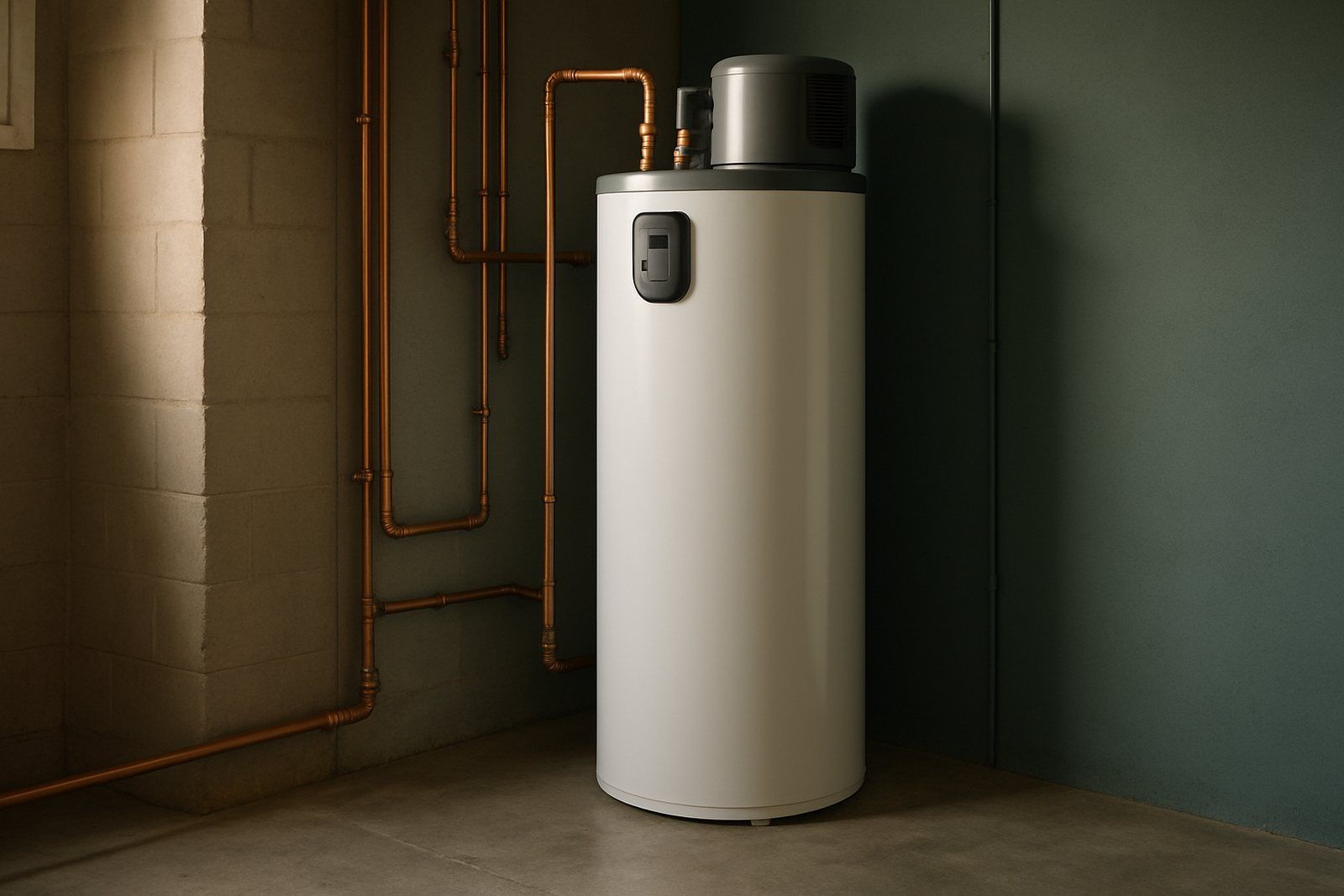
| Heat pump water heater instead of electric tank | Energy only, by a large margin |
Cost per shower is the energy price of one shower. Cost per year is the total for your household, so you can see what a habit change is worth over twelve months.
The easiest savings come from flow and time. A WaterSense showerhead and a shorter shower each cut gallons and energy together. Upgrading the water heater only cuts energy, but by more: see the full comparison in the water heater cost calculator. If you are thinking about a heat pump model, our heat pump water heater guide explains what to expect.
Incoming water temperature. Groundwater is colder in northern states and in winter, so each shower takes more energy then. The tool uses one temperature for the year.
Energy rates. Electric rates vary a lot by state and by time of day. If you are on a time-of-use plan, the time your tank reheats matters.
Water and sewer charges. Some utilities bill sewer based on water use, so cutting gallons can save twice. Check your water bill for the price per 1,000 gallons and multiply by the gallons per year shown here.
Rebates. Some water utilities give away or discount WaterSense showerheads. The federal 25C tax credit for heat pump water heaters ended for property placed in service after December 31, 2025; our guide to energy tax credits in 2026 explains what changed. For more no-cost and low-cost ideas, see our guide on how to lower your energy bill.
The tool assumes a constant flow, one incoming water temperature and a fixed hot-water share. It uses rated UEF values, and it ignores heat lost in pipes between the water heater and the shower, as well as standby losses not captured by the rating. It does not include water or sewer charges. This is an educational estimate, not advice.
With this page's defaults, an 8-minute shower with a 2.0 gallon-per-minute showerhead and an electric tank water heater costs about $0.34 in energy and uses about 16 gallons of water. For a household taking 14 showers a week, that adds up to about $251 a year in energy. Water and sewer charges come on top. A gas or heat pump water heater lowers the energy cost.
It depends on the showerhead and water heater. A 10-minute shower with a 2.5 gallon-per-minute head and a gas tank water heater, at $1.35 a therm, uses about 25 gallons and costs about $0.20 in energy, according to this calculator. With an electric tank, the energy cost is higher. Enter your own details to see your number.
Your showerhead's flow rate tells you. Federal rules cap new showerheads at 2.5 gallons per minute at 80 pounds per square inch of pressure, and WaterSense labeled models use no more than 2.0 gallons per minute. Older heads made before the federal limit may use more. To check yours, time how long it takes to fill a 1-gallon bucket.
Yes, on both water and the energy to heat it. EPA's WaterSense program estimates that replacing showerheads with WaterSense labeled models saves the average family more than 2,700 gallons of water a year and more than 330 kWh of electricity from reduced water heating. Choose a labeled model, since they are tested to perform as well as or better than standard heads.
Usually a shower, if it is reasonably short. A bath's cost depends on how many gallons it holds and how hot it is. To compare, divide the bath's hot-water gallons by your showerhead flow to find the shower length that uses the same water, then enter that length here. Long showers with a high-flow head can use as much as a bath.
Most people mix hot and cold water at the tap, so not all the water comes from the water heater. The tool defaults to 70%. In winter, with colder incoming water, you may use a higher share of hot water to reach the same comfort; in summer, a lower share. If you like very hot showers or keep the tank at a lower setting, try a higher figure.
This calculator gives educational estimates, not quotes, tax advice or an eligibility decision. Results depend on the inputs and assumptions shown above. How we research
How much a heat pump water heater saves, how to size it with first hour rating and UEF, where it can go, 120V vs 240V, costs, and how it compares with gas.

Ways to lower your energy bill, ranked from free habit changes to low-cost fixes and big upgrades, with official savings figures and where to find help.