Heating & cooling
Heat Pumps for Your Home: Cost, Savings and How to Choose
What a heat pump costs to run in 2026, how much it can save versus a furnace, AC or baseboard heat, how to read SEER2 and HSPF2, and what help is left.
Topics
Short answer
Yes. A cold-climate heat pump keeps heating efficiently well below freezing. To earn the ENERGY STAR cold-climate designation, a model must still deliver at least 70% of its rated heating capacity at 5°F with a coefficient of performance of at least 1.75. Most homes in very cold areas still plan some form of backup heat.
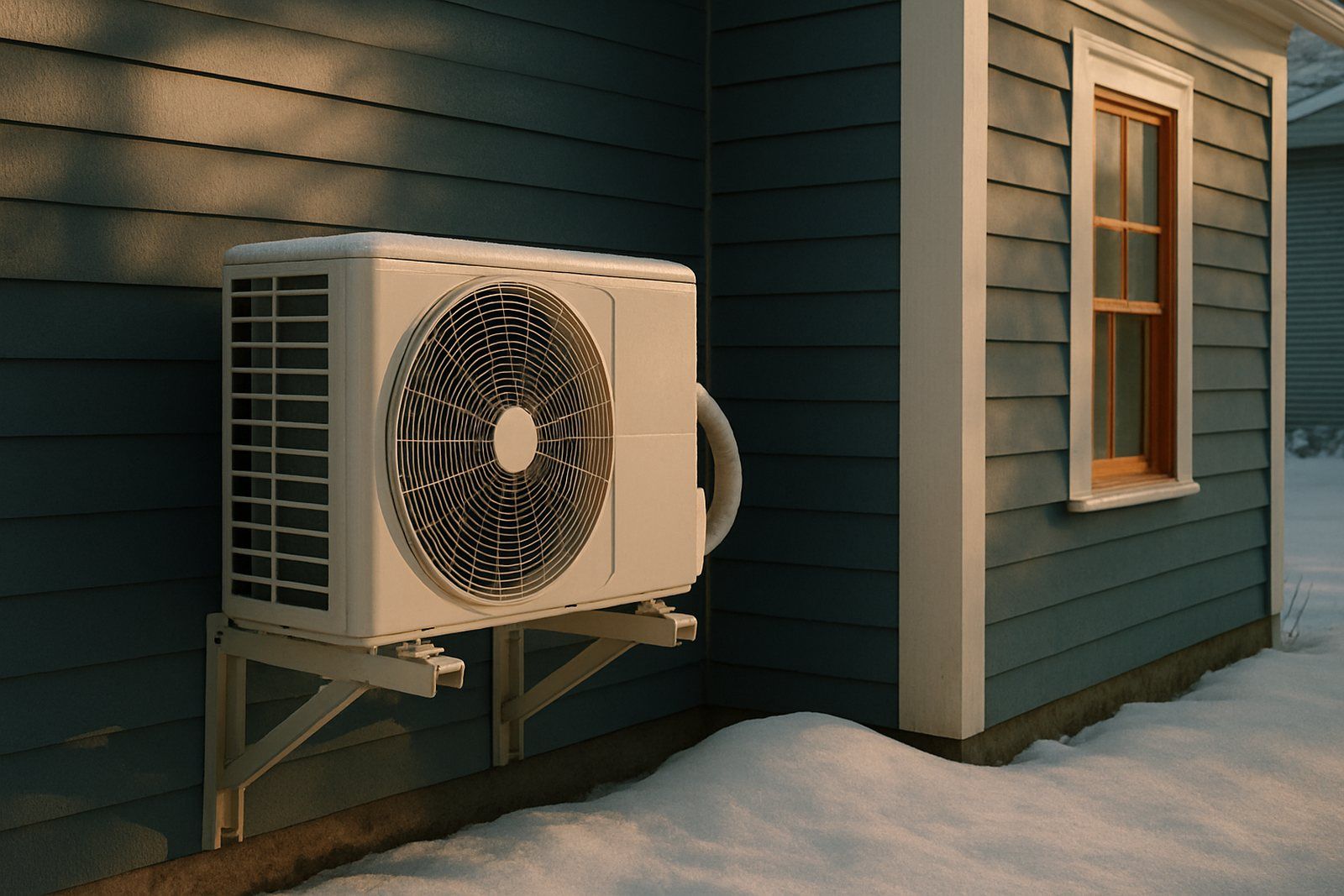
A cold climate heat pump is built to keep your home warm when outdoor temperatures drop well below freezing, the weather where older heat pumps struggled. If you live in the northern U.S. and wonder whether a heat pump can handle January, this guide explains what the technology can do, what the official labels guarantee, and how to plan for the coldest nights.
Yes. Even very cold air still holds heat that a heat pump can capture. ENERGY STAR explains that the refrigerant inside the outdoor coil is colder than the outdoor air, so it keeps absorbing heat. Cold-climate models use variable-speed compressors and better refrigerant controls to keep doing this efficiently at single-digit temperatures.
What changes in cold weather is not whether the unit works, but how much heat it delivers and at what efficiency. As the outdoor temperature falls, a heat pump has to work harder to move heat, so its capacity and its coefficient of performance (COP) both drop. Older single-speed units lost capacity quickly, which is where the reputation for “not working in the cold” came from.
The Department of Energy (DOE) says cold-climate heat pumps operate with greater capacity and efficiency at outdoor temperatures below 32°F than traditional heat pumps (DOE Cold Climate Heat Pump Challenge). That DOE challenge, launched in 2021 with manufacturers and Natural Resources Canada, set performance targets at 5°F and at -15°F.
To earn the ENERGY STAR cold-climate designation, a heat pump must deliver at least 70% of its 47°F heating capacity at 5°F, reach a COP of at least 1.75 at 5°F, and pass a test proving its own controls achieve that. It must also meet higher seasonal efficiency levels than standard ENERGY STAR heat pumps.
Here are the requirements from ENERGY STAR’s Version 6.2 heat pump specification, revised February 2026:
| Requirement | Standard ENERGY STAR (split) | Cold climate, ducted split | Cold climate, ductless split |
|---|---|---|---|
| SEER2 (cooling) | 15.2 or higher | 15.2 or higher | 15.2 or higher |
| HSPF2 (heating season) | 7.8 or higher | 8.1 or higher | 8.5 or higher |
| COP at 5°F | Not required | 1.75 or higher | 1.75 or higher |
| Heating capacity at 5°F | Not required | At least 70% of 47°F capacity | At least 70% of 47°F capacity |
| Controls verification test | Not required | Required | Required |
Source: ENERGY STAR Version 6.2 specification, checked October 2026.
A COP of 1.75 means that at 5°F the heat pump still delivers 1.75 units of heat for every unit of electricity. Electric baseboard heat always delivers 1 unit. So even on a 5°F night, a certified cold-climate unit gives you about 75% more heat per kWh than baseboards. On milder winter days the COP is higher.
The 70% capacity rule matters just as much. If a heat pump is rated at 36,000 BTU per hour at 47°F, it must still provide at least about 25,200 BTU per hour at 5°F to qualify. That keeps the unit doing most of the heating on cold days instead of handing the job to backup heat.
The NEEP list is a public database of air-source heat pumps that meet the cold-climate specification from Northeast Energy Efficiency Partnerships, a regional nonprofit. It shows each model’s heating capacity and efficiency at several low temperatures, so you and your installer can see how a system performs at your design temperature.
NEEP created its specification because, as it explains, the standard heating rating does not include test points below 17°F and assumes electric resistance backup. The specification was designed to identify heat pumps best suited to heat efficiently in IECC climate zone 4 and colder, and many efficiency programs use it as a minimum requirement for rebates (NEEP ccASHP specification). The current version, 4.0, took effect January 1, 2023.
How to use the NEEP list with a quote:
Savings are usually largest in cold homes that now heat with propane, heating oil or electric resistance. A DOE analysis published in February 2024 estimated that Michigan homes heating with propane or electricity could save about $1,500 a year on average with a cold-climate heat pump. Homes heated with natural gas may see smaller savings.
The same DOE analysis found that insulation and air sealing can cut the purchase and installation cost of a heat pump by up to $3,700 in pre-1970 homes in cold climates, because a tighter home needs a smaller system (DOE, February 2024). Our main guide to heat pump cost and savings walks through a simple bill comparison you can do with your own numbers.
Your results depend on local electricity and fuel prices, how cold your winters are, and how much backup heat runs. A heat pump that is undersized, or a thermostat that calls for backup heat too often, can quickly shrink the savings.
Most homes in very cold areas plan some backup heat, even with a cold-climate model. It covers the rare coldest nights, defrost cycles and equipment problems. The goal is to size the heat pump so backup heat runs only a few hours a year, not every cold morning.
There are three common setups:
Your thermostat setup is part of the backup plan. Many thermostats let you set an outdoor temperature lockout so resistance strips stay off unless it is truly cold. Our smart thermostat guide explains auxiliary heat lockouts and other heat pump settings.
Defrost is normal. In cold, damp weather, frost forms on the outdoor coil and blocks airflow. The heat pump briefly reverses to warm the coil and melt the ice. During that time you may see vapor rising from the outdoor unit and feel slightly cooler air from vents while backup heat fills in.
Modern units use sensors to defrost only when needed. A few defrost cycles on a frosty day are expected. Call a technician if the outdoor coil stays encased in ice, if defrost seems constant, or if the fan runs but the unit cannot clear the frost.
Help the unit defrost well:
Size a cold-climate heat pump with a Manual J load calculation at your local winter design temperature. Then compare that load with the model’s actual capacity at that temperature, not just its nominal rating at 47°F. This step separates a comfortable, efficient system from one that leans on backup heat.
A few points matter more in cold climates:
There is no federal tax credit for heat pumps installed in 2026, because the 25C credit ended for property placed in service after December 31, 2025. Some utilities and state programs still offer rebates, and many cold-region programs require a cold-climate model from the NEEP list or ENERGY STAR.
State-run Home Energy Rebates have tighter rules since DOE Program Notice 26-2 took effect May 29, 2026. Heat pump rebates under that program are now limited to homes that already heat with electricity, or new construction, and households must address insulation and air sealing first unless the home already meets a state-set level. Programs differ and some have paused, so check your state energy office and our state rebate guide before you sign. Confirm any tax questions with a tax professional.
Cold-climate heat pumps do work below freezing, and the ENERGY STAR cold-climate label guarantees tested performance at 5°F. Choose a model from that label or the NEEP list, size it with a Manual J calculation at your winter design temperature, seal and insulate first, and set up backup heat so it runs only when truly needed.
There is no single cutoff. Every model has its own low-temperature limit listed in the manufacturer's data, and cold-climate models are designed to keep running far below freezing. What changes as it gets colder is how much heat the unit can deliver and how efficiently. Ask your installer for the model's capacity and efficiency at 5°F and at your local winter design temperature, and check whether the unit shuts its compressor off at a set temperature.
That is usually the defrost cycle. In cold, damp weather, frost builds up on the outdoor coil. The heat pump briefly reverses to warm the coil and melt the ice, and the melting frost can look like steam or smoke. It is normal and typically lasts a few minutes. If the outdoor unit becomes a solid block of ice or the cycle never seems to end, call a technician.
Not always. Many homes in cold regions use a cold-climate heat pump with electric resistance backup built into the air handler. Others keep an existing gas, propane or oil furnace as backup, called a dual-fuel setup. Which makes sense depends on your design temperature, how well your home is insulated, the age of your furnace and local fuel prices. A load calculation tells you how much backup capacity you really need.
It is a public database of air-source heat pumps that meet the Northeast Energy Efficiency Partnerships cold-climate specification. NEEP is a regional nonprofit. The list shows heating capacity and efficiency at several low outdoor temperatures, including 5°F, which the standard HSPF rating does not fully capture. Many state and utility rebate programs in cold regions use it as an eligibility check, and installers use it to compare models.
Look up the exact outdoor and indoor model numbers in the ENERGY STAR product finder for heat pumps and check for the cold-climate designation. The model must meet the cold-climate efficiency levels and pass a controls verification test at 5°F. Check the full matched system, not just the outdoor unit, because the indoor coil or air handler affects the rating.
Outdoor units do make some sound when running hard on very cold days, and you may hear a whoosh when the defrost cycle starts or ends. Variable-speed models often run quietly at low speed for long periods. Place the outdoor unit away from bedroom windows where possible, on a stand that keeps it out of snow, and ask the installer for the model's published sound rating.
It can in smaller or very well insulated homes, but a single head often cannot spread heat evenly to closed-off bedrooms. Many cold-climate homes use several indoor heads or combine a ductless unit with existing heat. The ENERGY STAR cold-climate standard sets a higher heating efficiency bar for ductless split systems (8.5 HSPF2) than for ducted ones (8.1 HSPF2). A room-by-room load calculation shows which rooms need their own head.
Mount it on a stand or wall bracket high enough to stay above your typical snow depth, and away from roof edges where snow and ice can fall on it. Keep the area around it clear so air can flow. Defrost water needs a place to drain without forming an ice patch on a walkway. Your installer should follow the manufacturer's clearance and elevation instructions.
What a heat pump costs to run in 2026, how much it can save versus a furnace, AC or baseboard heat, how to read SEER2 and HSPF2, and what help is left.
How much a heat pump water heater saves, how to size it with first hour rating and UEF, where it can go, 120V vs 240V, costs, and how it compares with gas.
How much a smart thermostat saves, which settings matter, heat pump and C-wire compatibility, and how utility demand-response programs pay you.