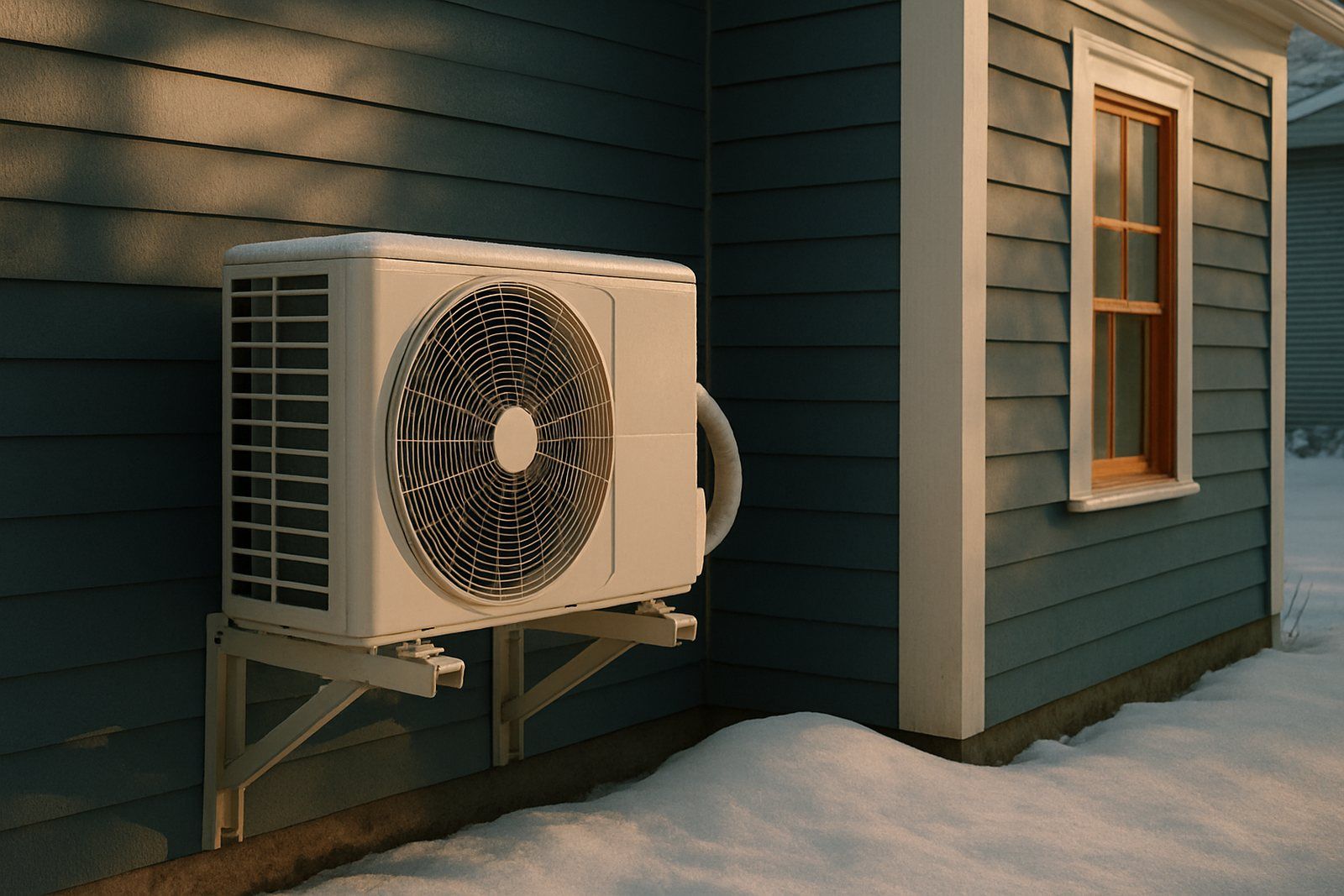
Heating & cooling
Cold-Climate Heat Pumps: Do They Really Work Below Freezing?
How cold-climate heat pumps perform below freezing, what the ENERGY STAR cold-climate label requires at 5°F, how to use the NEEP list and plan backup heat.
Topics
Short answer
A heat pump's cost depends on your home, climate and ductwork, so get at least three written quotes. Running costs are often lower: the Department of Energy says a heat pump can cut electricity used for heating by about 65% compared with baseboard or electric furnace heat. Savings are biggest when replacing electric resistance, oil or propane heat.
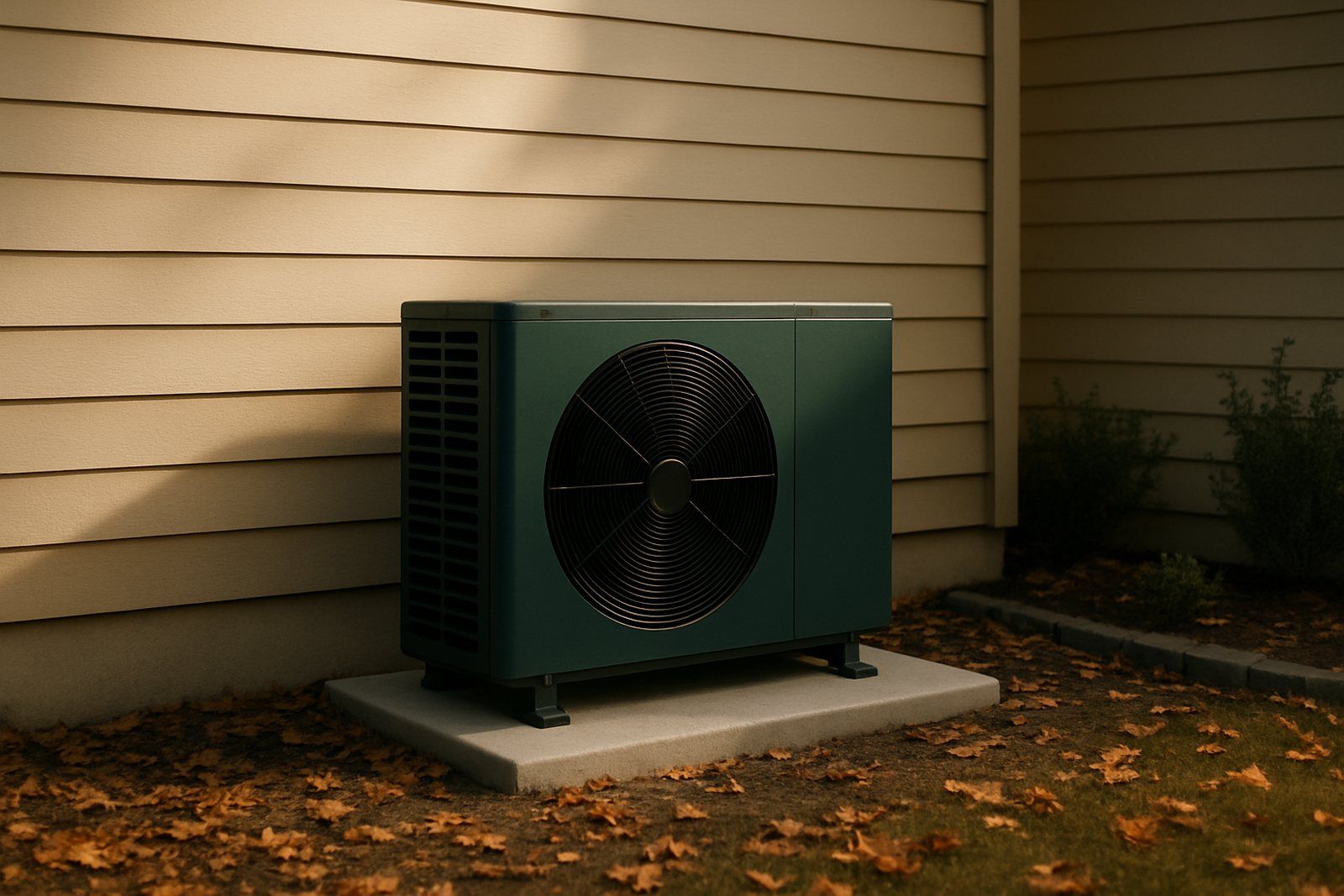
Heat pump cost is the first question most homeowners ask, and the honest answer has two parts: what you pay to install one, and what you pay to run it every month. This guide explains both, shows where the biggest savings come from, and walks you through sizing, efficiency ratings and the incentives that are still available in 2026.
A heat pump saves money because it moves heat instead of making it. In winter it pulls heat from outdoor air and moves it inside. In summer it works like an air conditioner. ENERGY STAR says an air-source heat pump can deliver up to three times more heat energy than the electricity it uses.
A furnace or baseboard heater creates heat by burning fuel or running current through a resistance coil. Even a perfect electric baseboard turns one unit of electricity into one unit of heat. A heat pump uses that same unit of electricity to move two or three units of heat, which is why it costs less to run.
The Department of Energy (DOE) says today’s heat pumps can reduce electricity use for heating by approximately 65% compared with electric resistance heating such as electric furnaces and baseboard heaters (DOE, Home Upgrades). ENERGY STAR puts it another way: a certified heat pump can heat a home for roughly one-third the cost of traditional electric heat and about half the cost of oil heat, depending on where you live.
Savings depend mostly on the fuel you use now. Homes heated with electric resistance, oil or propane usually save the most. Homes with natural gas may save less or break even, depending on local prices. A DOE analysis in February 2024 found a matched heat pump would lower bills for over 90% of households it assessed.
That DOE Office of Policy analysis gave two examples. In Arizona, homes where a variable-speed ENERGY STAR heat pump was the best option saved about $300 a year. In Michigan, homes heating with propane or electricity saved about $1,500 a year on average with a cold-climate model (DOE, February 2024).
You can do a rough check with your utility bills:
For example, a home using 10,000 kWh a year on baseboard heat at 17.30 cents pays about $1,730. Cutting that use by about 65% would save roughly $1,125 a year. This is simple arithmetic, not a quote, so ask your contractor for a load-based estimate.
Installed prices vary widely by home size, climate, ductwork condition, electrical upgrades and local labor rates. No single national price is reliable, so the best approach is to collect at least three written quotes that list the model, its efficiency ratings, the sizing method used and any electrical or duct work included.
Several things push the price up or down:
Timing matters too. ENERGY STAR notes that heat pumps and central air conditioners are comparable in price before incentives. If your AC or furnace is near the end of its life, the extra cost of choosing a heat pump instead of a like-for-like replacement is often small.
SEER2 measures cooling efficiency and HSPF2 measures heating efficiency over a season. Higher is better for both. Since January 1, 2023, all U.S. ratings use an updated federal test, which is why the numbers end in “2.” Federal minimums for split-system heat pumps are 14.3 SEER2 and 7.5 HSPF2.
SEER2 stands for Seasonal Energy Efficiency Ratio 2: the cooling delivered over a season divided by the electricity used. HSPF2, or Heating Seasonal Performance Factor 2, is the heating version. EER2 (Energy Efficiency Ratio 2) measures cooling at a single hot-weather test point. Compare these only with other “2” ratings, not with older SEER or HSPF numbers.
ENERGY STAR’s current heat pump specification (Version 6.2, revised February 2026) sets these minimums:
| Heat pump type | SEER2 (cooling) | EER2 (peak cooling) | HSPF2 (heating) |
|---|---|---|---|
| Federal minimum, split system | 14.3 | — | 7.5 |
| ENERGY STAR, split system | 15.2 or higher | 11.0 or higher | 7.8 or higher |
| ENERGY STAR, single package | 15.2 or higher | 10.0 or higher | 7.2 or higher |
| ENERGY STAR Cold Climate, ducted split | 15.2 or higher | — | 8.1 or higher |
| ENERGY STAR Cold Climate, ductless split | 15.2 or higher | — | 8.5 or higher |
Sources: ENERGY STAR Key Product Criteria and the DOE Federal Energy Management Program, checked October 2026.
It can, especially where you heat or cool a lot. DOE’s Federal Energy Management Program (FEMP) compared three models for hot-humid Southeast states, in 2023 dollars. A 14.3 SEER2 / 7.5 HSPF2 unit cost about $1,354 a year to run. An ENERGY STAR 15.2 / 7.8 unit cost about $1,283. The best available 24 / 11 model cost about $846 a year, saving up to $5,533 over 15 years compared with the basic unit.
Those figures use FEMP’s own assumptions, so your numbers will differ. The pattern is what matters: the jump from minimum to ENERGY STAR saves a little, while top-tier variable-speed units can save much more in climates with long heating or cooling seasons. Ask your installer to price two efficiency levels so you can compare.
A heat pump should be sized with a room-by-room load calculation, usually ACCA Manual J. That calculation uses your insulation, windows, air leaks and local design temperatures. Sizing by square footage or by copying your old furnace often leads to an oversized system that costs more and performs worse.
An oversized heat pump turns on and off often. That short-cycling wastes energy, wears parts and removes less humidity in summer. An undersized one leans too hard on backup heat in winter. Variable-speed (inverter) models handle a wider range of loads, but they still need correct sizing.
Here is what a good sizing process looks like:
Fixing the house first can shrink the system you need. ENERGY STAR notes that better insulation can let you choose a smaller, less expensive heat pump. Our guide to attic insulation levels by climate zone shows where to start, and sealing air leaks before you size anything helps even more.
Choose ducted if you already have ductwork in good shape, because the heat pump can connect to it much like a central air conditioner. Choose ductless mini-splits if your home has no ducts, such as homes with baseboards or boilers, or if you want to heat and cool an addition or a few rooms.
| Question | Ducted (central) heat pump | Ductless mini-split |
|---|---|---|
| Best for | Homes with existing ducts | Homes without ducts, additions, problem rooms |
| Where heat comes out | Existing vents in every room | Wall, ceiling or floor heads in each zone |
| Efficiency watch-out | Leaky ducts in attics or crawl spaces waste energy | Each zone needs its own indoor unit |
| Room-by-room control | Limited unless zoned | Each head has its own settings |
| Typical swap scenario | Replacing an old furnace and AC | Replacing baseboard heat or supplementing a boiler |
Some homes use both: a central system for the main floor and a ductless head for a finished attic or bonus room. Ask for a duct leakage check before you decide, since sealing ducts can make a ducted system much more efficient.
Most heat pumps include backup heat for very cold days or defrost periods. It is usually electric resistance strips inside the air handler. A dual-fuel system instead keeps a gas or propane furnace as the backup. Backup heat is useful, but if it runs too often, your bills rise sharply.
Set your thermostat so backup heat only runs when it is really needed. Many smart thermostats let you set an outdoor temperature “lockout” so the strips stay off above a chosen temperature. Ask your installer to set this up and explain how deep nighttime setbacks affect backup heat.
There is no federal tax credit for heat pumps installed in 2026. The 25C credit ended for property placed in service after December 31, 2025. State-run Home Energy Rebates still operate in some states, and many utilities offer their own rebates, but rules tightened in mid-2026.
Under Public Law 119-21 (signed July 4, 2025), the IRS says the Energy Efficient Home Improvement Credit (25C) is not allowed for property placed in service after December 31, 2025. If your heat pump was placed in service during 2025, you can still claim it on your 2025 return using Form 5695. That credit was 30% of cost, up to $2,000 a year for heat pumps, and a manufacturer Qualified Manufacturer ID (QMID) is required for 2025 property. Our 2026 energy tax credit guide explains the dates, and a tax professional can confirm your case.
The federal Home Energy Rebates are run by states. Under the original law, the High-Efficiency Electric Home Rebate (HEEHR) set a statutory maximum of $8,000 for a heat pump for low- and moderate-income households. Your state’s program sets the actual amounts.
DOE Program Notice 26-2, effective May 29, 2026, changed the rules. HEEHR rebates no longer fund switching from gas, oil, propane or other fossil fuels to electric. Heat pump rebates are limited to homes that already heat with electricity, or new construction. Households must also address insulation and air sealing before appliance rebates, unless the home already meets a state-set insulation level.
As of the NASEO tracker update of September 30, 2026, HEEHR programs have launched in states including Arizona, California, Georgia, Maine, Michigan, New Mexico, New York, North Carolina, Rhode Island and Wisconsin. Some have paused or run out of money, so check your state energy office page and our state-by-state rebate guide.
Many electric utilities still offer heat pump rebates, discounted equipment or on-bill financing. You can search programs by ZIP code on DSIRE, the incentives database run by the NC Clean Energy Technology Center. Always confirm terms directly with the program before you sign a contract.
A heat pump is one of the most effective ways to cut heating and cooling costs, especially if you now use electric resistance, oil or propane. Insist on a Manual J sizing calculation, compare at least two efficiency levels, and get three written quotes. The federal tax credit is gone for 2026 installs, so check your state energy office and your utility for the rebates that remain.
Sometimes, but not always. It depends on your local electricity and gas prices and on how efficient both systems are. A February 2024 Department of Energy analysis found that about 13 million homes heating with natural gas would save by switching to a heat pump, but gas homes generally see smaller savings than homes using oil, propane or electric resistance heat. Ask your installer to estimate annual costs for both options using your actual utility rates.
Yes. This setup is often called a dual-fuel or hybrid system. The heat pump handles cooling and most heating, and the furnace takes over on the coldest days. It can make sense if your furnace is fairly new or if gas is cheap where you live. A contractor sets a switchover temperature in the thermostat. Make sure the thermostat is compatible with both systems before you buy.
The right size comes from a heating and cooling load calculation, usually ACCA Manual J, not from the size of your old system or a rule of thumb per square foot. The calculation looks at insulation, windows, air leaks, orientation and your local design temperatures. An oversized heat pump short-cycles, removes less humidity and can cost more. If you improve insulation and air sealing first, you may be able to buy a smaller unit.
Lifespan depends on climate, installation quality and maintenance. The Department of Energy's federal purchasing guidance uses a 15-year lifetime when it compares heat pump models, which is a useful planning figure. Regular filter changes, keeping the outdoor unit clear of leaves and snow, and a professional tune-up help any system last longer. Ask about the manufacturer warranty and the installer's labor warranty in writing.
Yes. In summer an air-source heat pump works the same way as a central air conditioner, moving heat from inside your home to the outdoors. In winter it reverses and moves heat from outdoor air into your home. ENERGY STAR notes that heat pumps also remove humidity efficiently. If your central AC is near the end of its life, replacing it with a heat pump gives you heating and cooling in one system.
SEER2 measures cooling efficiency over a typical cooling season, and HSPF2 measures heating efficiency over a typical heating season. Higher numbers mean lower operating costs for each. The 2 at the end means the rating uses the updated federal test procedure that started January 1, 2023, so these numbers are not directly comparable with older SEER and HSPF ratings. Compare models using the same version of the rating.
No. Under Public Law 119-21, the federal Energy Efficient Home Improvement Credit (25C) is not allowed for property placed in service after December 31, 2025. If your heat pump was installed and running in 2025, you may still claim it on your 2025 tax return. Some state and utility programs still offer rebates. Confirm your situation with the IRS guidance or a tax professional.
If you have ductwork in good condition, a ducted heat pump usually replaces your furnace or central AC most simply. If you have no ducts, such as a home heated with baseboards, boilers or wood stoves, ductless mini-splits avoid the cost of adding ducts. Leaky ducts in an attic or crawl space waste energy, so ask for a duct inspection before deciding. Some homes mix both types.
Your electric bill will usually go up if you switch from gas, oil or propane, because electricity now does the heating. The question is whether your total energy spending goes down. Add up what you pay for all heating fuels today and compare it with the estimated new electricity use. If you switch from electric baseboard or an electric furnace, your electric bill should fall, because the heat pump needs far less electricity.
How cold-climate heat pumps perform below freezing, what the ENERGY STAR cold-climate label requires at 5°F, how to use the NEEP list and plan backup heat.
How much a heat pump water heater saves, how to size it with first hour rating and UEF, where it can go, 120V vs 240V, costs, and how it compares with gas.
How much a smart thermostat saves, which settings matter, heat pump and C-wire compatibility, and how utility demand-response programs pay you.