Heating & cooling
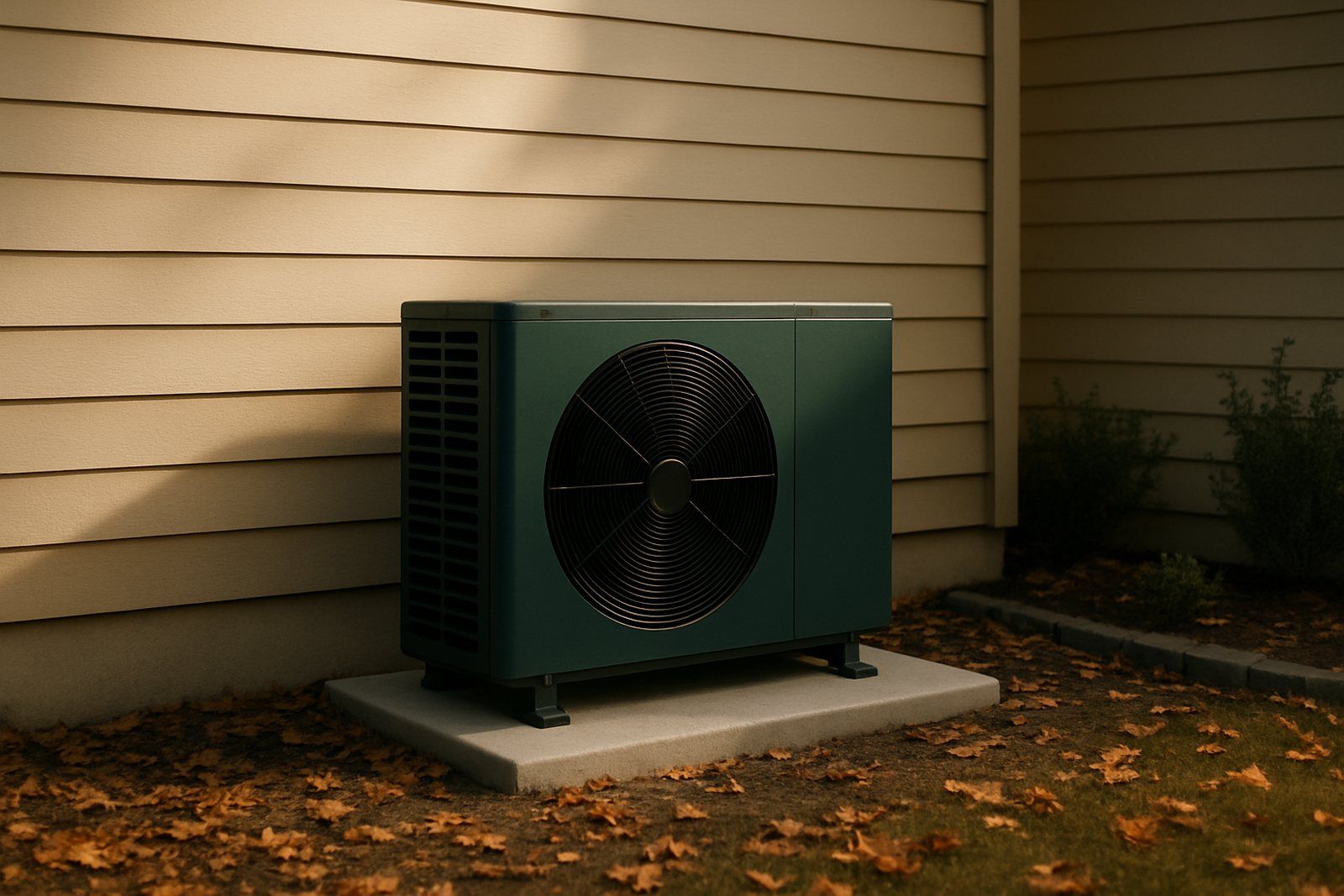
Heat Pumps for Your Home: Cost, Savings and How to Choose
What a heat pump costs to run in 2026, how much it can save versus a furnace, AC or baseboard heat, how to read SEER2 and HSPF2, and what help is left.
Topics
Enter your room's length and width, sun exposure and how many people use it. The calculator applies the ENERGY STAR chart and adjustments to recommend a cooling capacity in BTU.
Updated · Free, private: nothing you type leaves your browser.
Your results
For 300 sq ft, choose about 8,000 BTU. A unit that is too big cools fast but leaves the room clammy.
Estimate only. Uses the assumptions explained below.
Choosing the right size room air conditioner matters more than most people think. Too small and it runs nonstop without catching up. Too big and it chills the room fast but leaves it damp and clammy. This AC BTU calculator uses the sizing chart and adjustments published by ENERGY STAR.
The calculator multiplies length by width to get the floor area, looks up that area in the ENERGY STAR room air conditioner chart, then applies ENERGY STAR’s four adjustments.
Area (sq ft)        = length × width
Chart capacity      = BTU per hour for that area band (ENERGY STAR chart)
Heavily shaded      → chart capacity × 0.9   (reduce 10%)
Very sunny          → chart capacity × 1.1   (increase 10%)
More than 2 people  → add 600 BTU for each person over 2
Kitchen             → add 4,000 BTU
Recommended         = adjusted capacity, rounded to the nearest BTU
BTU here means British thermal units per hour, the cooling capacity printed on every unit. ENERGY STAR says its chart assumes an 8-foot ceiling.
The chart covers rooms from 100 to 2,500 square feet. Below 100 square feet the calculator points you to the smallest common unit, 5,000 BTU. Above 2,500 square feet it tells you to get a professional load calculation instead.
The default room is 15 feet by 20 feet, with average sun, 2 regular occupants and no kitchen.
A sunny bedroom-office is 18 by 22 feet and four people often use it. The area is 396 square feet, so the chart says 9,000 BTU (the band “350 up to 400”). The calculator adds 10 percent for sun (9,900 BTU) and 600 BTU for each of the two extra people (1,200 BTU). The recommendation is 11,100 BTU. Most stores sell 10,000 and 12,000 BTU units, so a 12,000 BTU unit is the closer fit.
A kitchen shows how much cooking heat matters. A 12 by 14 foot kitchen is 168 square feet. The chart says 6,000 BTU, and the kitchen adjustment of 4,000 BTU brings the recommendation to 10,000 BTU.
Chart capacity is the ENERGY STAR starting point for your floor area alone. Recommended capacity is that number after adjustments. Shop for the nearest size you can find. When you are between sizes, think about humidity: in a muggy climate, a slightly smaller unit that runs longer removes more moisture.
If the calculator says your space is over 2,500 square feet, a room unit is the wrong tool. Ask for a Manual J load calculation for a central system or a multi-zone heat pump. Our heat pump cost and savings guide explains what a proper sizing visit should include.
These bands come straight from ENERGY STAR. The calculator uses them before applying adjustments.
| Area to be cooled (sq ft) | Capacity needed (BTU per hour) |
|---|---|
| 100 up to 150 | 5,000 |
| 150 up to 250 | 6,000 |
| 250 up to 300 | 7,000 |
| 300 up to 350 | 8,000 |
| 350 up to 400 | 9,000 |
| 400 up to 450 | 10,000 |
| 450 up to 550 | 12,000 |
| 550 up to 700 | 14,000 |
| 700 up to 1,000 | 18,000 |
| 1,000 up to 1,200 | 21,000 |
| 1,200 up to 1,400 | 23,000 |
| 1,400 up to 1,500 | 24,000 |
| 1,500 up to 2,000 | 30,000 |
| 2,000 up to 2,500 | 34,000 |
Climate and humidity. The chart is national. In very hot climates or rooms that bake in afternoon sun, the “very sunny” adjustment helps. In humid areas, avoid going bigger than you need, because ENERGY STAR notes an oversized unit leaves the room clammy.
Ceiling height and insulation. ENERGY STAR’s chart assumes 8-foot ceilings. Higher ceilings, an uninsulated attic above, or leaky windows all add heat. Sealing and insulating first can let a smaller unit do the job; see our air sealing guide.
Efficiency. ENERGY STAR says most certified room air conditioners now include variable speed compressors, which adjust output instead of switching on and off. They handle a range of loads better and run more quietly.
Running cost. Before you buy, it is worth checking that the room itself is not wasting cooling. Our guide on how to lower your energy bill covers shading, fans and thermostat settings. Electricity prices also vary widely. In July 2026, the US average residential price was 18.31 cents per kWh, ranging from about 12.72 cents in Louisiana to 48.00 cents in Hawaii (EIA). Use the appliance energy cost calculator with the unit’s watts to estimate its monthly cost.
Central systems. Central air conditioners and heat pumps must meet federal minimums set by the Department of Energy. Since January 1, 2023, split-system central air conditioners must reach at least 13.4 SEER2 in the North and 14.3 SEER2 in the Southeast and Southwest for units under 45,000 BTU per hour (DOE FAQ). To compare running costs of central systems, use the SEER2 savings calculator.
This calculator follows the ENERGY STAR chart and its four adjustments. It does not account for ceiling height, insulation levels, window size and direction, local climate, heat from electronics, or open floor plans. It does not size central systems, ducts or multi-zone heat pumps.
The result is an educational estimate, not a load calculation, a quote or advice. For a whole-home system, ask a contractor for a written Manual J calculation and at least three written quotes.
There is no single number per square foot, because the ENERGY STAR chart steps up in bands. A room of 150 to 250 square feet calls for 6,000 BTU per hour, 300 to 350 square feet for 8,000 BTU, and 450 to 550 square feet for 12,000 BTU. Small rooms need more BTU per square foot than large ones. The calculator finds your band and then adjusts for sun, people and kitchen use.
A 12 by 12 foot room is 144 square feet, which falls in the ENERGY STAR band of 100 up to 150 square feet, so the chart says 5,000 BTU per hour. If the room is very sunny, add 10 percent, which gives 5,500 BTU. If it is heavily shaded, the calculator shows 4,500 BTU, but 5,000 BTU is about the smallest common size, so that is what you would buy.
ENERGY STAR warns that an oversized unit cools the room before it has a chance to remove humidity, leaving the air cool but damp and clammy. It also costs more to buy and wastes energy because it cycles on and off often. Pick the size closest to the recommendation. Units with variable speed compressors handle a range of loads better.
Yes. ENERGY STAR's chart assumes an 8-foot ceiling. A room with a higher ceiling has more air to cool, so you may need the next size up. The same goes for rooms with large west-facing windows, poor insulation or a lot of heat-producing equipment. This calculator does not ask for ceiling height, so adjust upward yourself.
ENERGY STAR says to add 4,000 BTU per hour when the unit is used in a kitchen, because cooking adds a lot of heat. For example, a 12 by 14 foot kitchen is 168 square feet. The chart says 6,000 BTU, and with the kitchen adjustment the calculator recommends 10,000 BTU.
Only as a rough check for a single-room mini-split head. The ENERGY STAR chart is for room air conditioners. Central systems and multi-room heat pumps should be sized by a contractor using a Manual J load calculation, which looks at insulation, windows, air leaks, orientation and your local climate. The calculator flags spaces over 2,500 square feet for this reason.
Usually, yes. A larger unit draws more power when it runs, and an oversized unit wastes energy by short cycling. What you pay also depends on the unit's efficiency rating and your electricity rate. For room units, compare the yearly energy cost on the yellow EnergyGuide label. For central systems, the SEER2 savings calculator compares the yearly cost of different efficiency levels.
This calculator gives educational estimates, not quotes, tax advice or an eligibility decision. Results depend on the inputs and assumptions shown above. How we research
What a heat pump costs to run in 2026, how much it can save versus a furnace, AC or baseboard heat, how to read SEER2 and HSPF2, and what help is left.

Ways to lower your energy bill, ranked from free habit changes to low-cost fixes and big upgrades, with official savings figures and where to find help.